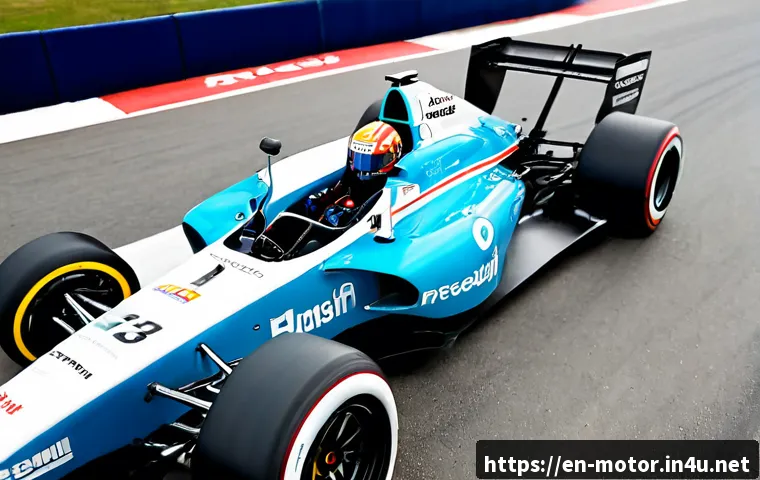
A Formula 1 car typically begins a Grand Prix with a tightly regulated fuel allocation rather than a full road-car-style tank. Learn how fuel-flow rules, race distance, safety cars, and driving strategy affect consumption.
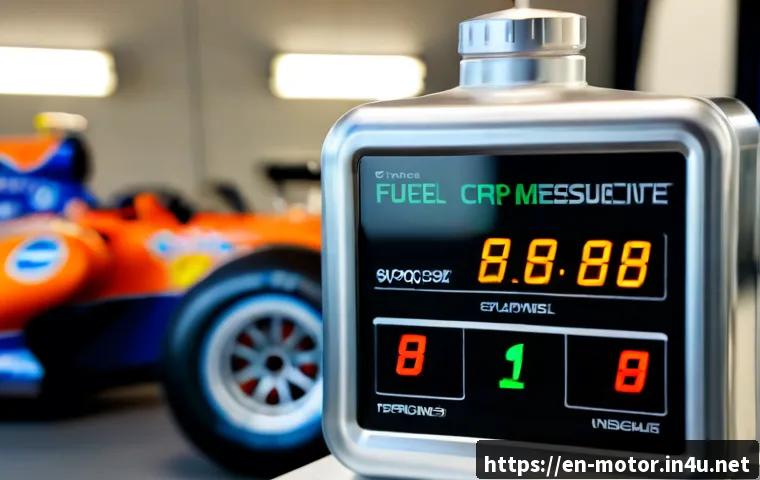
A Formula 1 car’s race fuel use is planned around a regulated allocation, commonly approximately 110 kg in recent regulations, not around a simple “full tank” figure. The amount actually burned can be lower or different from the starting load because track conditions, race interruptions, pace, and team strategy all matter.
Fuel flow has also been regulated, with a widely used modern limit of 100 kg per hour under specified operating conditions. That makes fuel management part of performance engineering, not just a concern for the final laps. For viewers, radio messages about saving fuel often explain a driver’s pace more clearly than tyre age alone. For sim racers and track-day buyers, the same basic planning logic can help when comparing telemetry tools, simulator realism, and running-cost expectations.
At a Glance
- Recent F1 rules have commonly capped Grand Prix fuel allocation at approximately 110 kg, but the applicable season’s regulations must always be checked.
- Fuel use depends on more than distance: full-throttle time, elevation, weather, safety cars, tyres, and race pace can all change the outcome.
- Teams manage consumption through lift-and-coast, engine-mode management, drafting, and pace control.
| Decision Point | What It Means in F1 | What a Viewer Can Notice |
|---|---|---|
| Starting fuel allocation | A regulated race-planning limit, commonly around 110 kg in recent seasons | Teams discussing whether they are “on target” for fuel |
| Fuel-flow limit | A technical restriction; a widely used modern figure is 100 kg per hour under specified conditions | Why maximum power cannot be treated as unlimited |
| Race variables | Track layout, weather, cautions, traffic, and tyre choices affect actual use | Changing lap times, strategy calls, and radio messages |
| Fuel-saving response | Drivers may lift earlier, manage pace, or use traffic efficiently | “Lift and coast,” “fuel save,” or target-lap instructions |
The Short Answer: Fuel Use Is Planned, Limited, and Managed
Why an F1 car does not simply fill up like a road car
An F1 car is not fueled like an ordinary road vehicle before a long journey. Its race fuel plan is built around technical and sporting regulations, the expected race distance, and the team’s forecast for how the event will unfold. A standard Grand Prix generally covers at least 305 km, with Monaco as the exception. The important question is not simply how much fuel fits in the car, but how much fuel is permitted, how quickly it may be used, and how carefully it must be managed.
The difference between fuel load, fuel flow, and fuel burned
Fuel load is what the team puts in at the start. Maximum permitted fuel is the regulatory ceiling that applies for the relevant season. Fuel burned is the amount actually consumed during that particular race. These figures are related, but they are not interchangeable. A team can start within the permitted allocation and still need to save fuel because the live race may be consuming more than its original target.
Why the final number varies from race to race
The exact consumption of a specific car in a specific Grand Prix is not something fans can reliably calculate from a broadcast alone. Teams do not publicly disclose every fuel target, engine setting, or strategy model. A caution period may reduce consumption compared with uninterrupted racing, while a hard-fought battle or an unexpected pace requirement can change the picture. Treat any precise per-car claim without official supporting data with caution.
The Regulations That Shape Race Fuel Consumption
Race fuel allocation and season-specific rule changes
In recent F1 regulations, Grand Prix fuel allocations have commonly been capped at approximately 110 kg. That figure is useful context, not a permanent rule for every season. Formula 1 regulations can change, so anyone comparing current race technology, simulator rulesets, or event commentary should check the applicable sporting and technical regulations rather than relying on an older headline.
Fuel-flow restrictions and power-unit efficiency
Fuel flow has been regulated as part of modern F1 power-unit rules, with a widely used limit of 100 kg per hour under specified operating conditions. This helps explain why efficiency is central to F1 engineering. The goal is not merely to burn less fuel; it is to turn the permitted fuel use into competitive lap time while preserving enough margin for the full race.
Why compliant racing fuel is a specialist product
F1 fuel is a highly specified racing product designed to comply with technical rules. It should not be treated as identical to ordinary pump petrol. Its permitted composition and the current technical requirements need to be checked against the regulations for the season in question. The commercial price a particular team pays is not public information that can be assumed from consumer fuel prices.
What Makes One Grand Prix Use More Fuel Than Another
Circuit length, lap count, elevation, and full-throttle time
Track characteristics matter more than a simple “high-use” or “low-use” ranking. A circuit with long periods at high throttle can place a different demand on the fuel plan than one dominated by slower corners. Elevation changes can also affect the work required from the power unit. Lap count and circuit length shape the total distance, but the way the car is driven around that distance is just as important.
Weather, safety cars, red flags, and tyre strategy
Weather can alter grip, pace, and tyre decisions. Safety cars and red flags can materially change fuel consumption because they interrupt normal racing conditions. Tyre choices may also affect target pace and therefore the fuel plan. None of these variables guarantees a particular outcome, but together they explain why teams continuously update their calculations instead of following one fixed pre-race number.
Traffic, slipstreaming, and defending position
Running in traffic is not always straightforward. Drafting can help a following car reduce aerodynamic resistance, while defending, attacking, and repeated changes in pace can complicate the plan. A driver who is asked to save fuel may still need to react to nearby rivals. That is why fuel strategy is usually a compromise between efficiency, track position, tyre condition, and race risk.
How Teams Save Fuel Without Giving Away Too Much Pace
Lift-and-coast explained in plain English
Lift-and-coast means the driver releases the throttle earlier before a braking zone, then lets the car coast briefly before braking. The technique can reduce fuel use without changing every part of the lap. It may cost some lap time, but the team uses it because finishing the race at a sustainable fuel target is more valuable than extracting maximum pace for only a few laps.
Engine deployment, lift points, and target lap times
Teams can manage fuel through engine-mode management, defined lift points, drafting opportunities, and target lap times. The detailed settings and targets are generally not public, so it is best not to interpret a single radio message as a complete strategy disclosure. “Fuel save” may mean a small adjustment for several laps, a precaution after a change in race conditions, or preparation for a later phase of the event.
Common viewer mistakes when interpreting fuel-saving radio calls

A fuel-saving instruction does not automatically mean the car started illegally light, has a mechanical problem, or will lose multiple positions. It also does not prove that a driver is slower than a teammate for one simple reason. Listen for the context: Is there a safety car? Is the driver in a slipstream? Is the team protecting tyres, managing a gap, or asking for a target lap time? The broadcast picture rarely shows the entire calculation.
Applying F1 Fuel Logic to Sim Racing and Track-Day Planning
When fuel calculators and telemetry subscriptions add value
For sim racing, a fuel calculator or telemetry tool can be useful when you want repeatable stints, clearer pit planning, and an easier way to compare laps. Look for data access, compatibility, readable reports, and settings that match your simulator. The value is practical: you can learn how pace changes fuel use within that game or platform. It is not a direct replica of confidential real-world F1 strategy.
Choosing realistic simulator settings without overcomplicating a session
Start with the fuel and tyre settings used by the simulator’s selected car and event format. Add realism gradually: first practice consistent laps, then test fuel loads, then review telemetry. A strong sim-racing setup is not necessarily the one with the most complex dashboard. It is the one that gives you usable feedback, dependable controls, and a level of detail you can actually apply during a session.
Track-day fuel budgeting, safety requirements, and vehicle limitations
Track-day planning is different from Formula 1, but the planning habit still applies. Consider your vehicle’s limitations, the event format, refueling arrangements, and the organizer’s safety requirements. Do not assume road-driving fuel use will match track running. Before booking a motorsport experience, review the official event information for safety standards, driver eligibility, vehicle rules, and included instruction.
Selection Criteria and Comparison Summary
Before choosing sim-racing hardware, a telemetry subscription, or a motorsport experience, compare budget, realism, data access, coaching, compatibility, and safety standards. For a simulator, prioritize reliable controls and software support before chasing advanced data features. For a track-day experience, prioritize the organizer’s official safety procedures and the clarity of what is included. If you want to compare options, check the official product or event page for detailed conditions, supported platforms, and safety information.
What to compare before buying sim-racing hardware or a motorsport experience
A simulator buyer should check whether the equipment fits the intended platform and whether telemetry can be viewed in a useful format. An experience buyer should check the event structure, instruction offered, vehicle limitations, and safety requirements. Both decisions benefit from knowing whether you want casual enjoyment, skill development, or detailed performance analysis.
Budget, realism, data access, coaching, and safety checklist
Ask five simple questions: Does it fit my budget? Does the realism level match my goal? Can I access data I understand? Is coaching available if I need guidance? Are the safety rules clearly explained? These checks are more useful than assuming the most expensive option will automatically provide the best experience.
The key takeaway for watching and understanding F1 strategy
Fuel management is a live performance tool. When you hear “lift and coast,” think of a team protecting its ability to finish at competitive pace under changing conditions. The starting allocation, fuel-flow restrictions, and on-track decisions all work together.
In Closing
F1 fuel consumption cannot be reduced to one fixed litres-per-race answer. Recent regulations commonly used an allocation of approximately 110 kg, while actual consumption remained dependent on the race itself. Fuel flow, circuit characteristics, interruptions, tyres, traffic, and driver management all shape the final result. That complexity is exactly why fuel radio messages can be so revealing during a Grand Prix.
Useful Things to Know
1. Fuel allocation and fuel actually burned are different measures.
2. A safety car or red flag can change the fuel picture during the race.
3. Lift-and-coast is a controlled efficiency technique, not automatically a sign of trouble.
4. Sim-racing calculations are useful for practice, but they do not reveal real F1 team strategy.
5. Current-season regulations should be verified before quoting any fuel limit as definitive.
Important Notes
The exact fuel consumed by a particular F1 car, its team-specific fuel targets, engine settings, and commercial fuel cost are not reliably known without verified official information. Rules, fuel-flow provisions, and permitted fuel composition can change by season. This article uses general recent-regulation context and should not be treated as confirmation of the current season’s technical rules.
Frequently Asked Questions
Q1. How many litres of fuel does a Formula 1 car use in one race?
A1. F1 race fuel is commonly discussed by mass rather than litres. Recent regulations have commonly capped the Grand Prix allocation at approximately 110 kg, but the exact amount a car burns in one race varies and cannot be converted into a single reliable litres figure without verified fuel-specific information and race data.
Q2. Why do F1 drivers save fuel even when they started with the permitted allocation?
A2. The permitted allocation is a maximum, not a guarantee that every race will follow the original consumption forecast. Pace changes, traffic, weather, tyre strategy, safety cars, and other events can shift the target. Drivers may use lift-and-coast, engine management, drafting, or pace control to bring consumption back in line.
Q3. Is Formula 1 fuel the same as the petrol sold at a normal fuel station?
A3. No. Formula 1 uses highly specified racing fuel that must comply with the sport’s technical rules. It is not equivalent to ordinary pump petrol, and the permitted composition must be checked against the applicable regulations for the season.