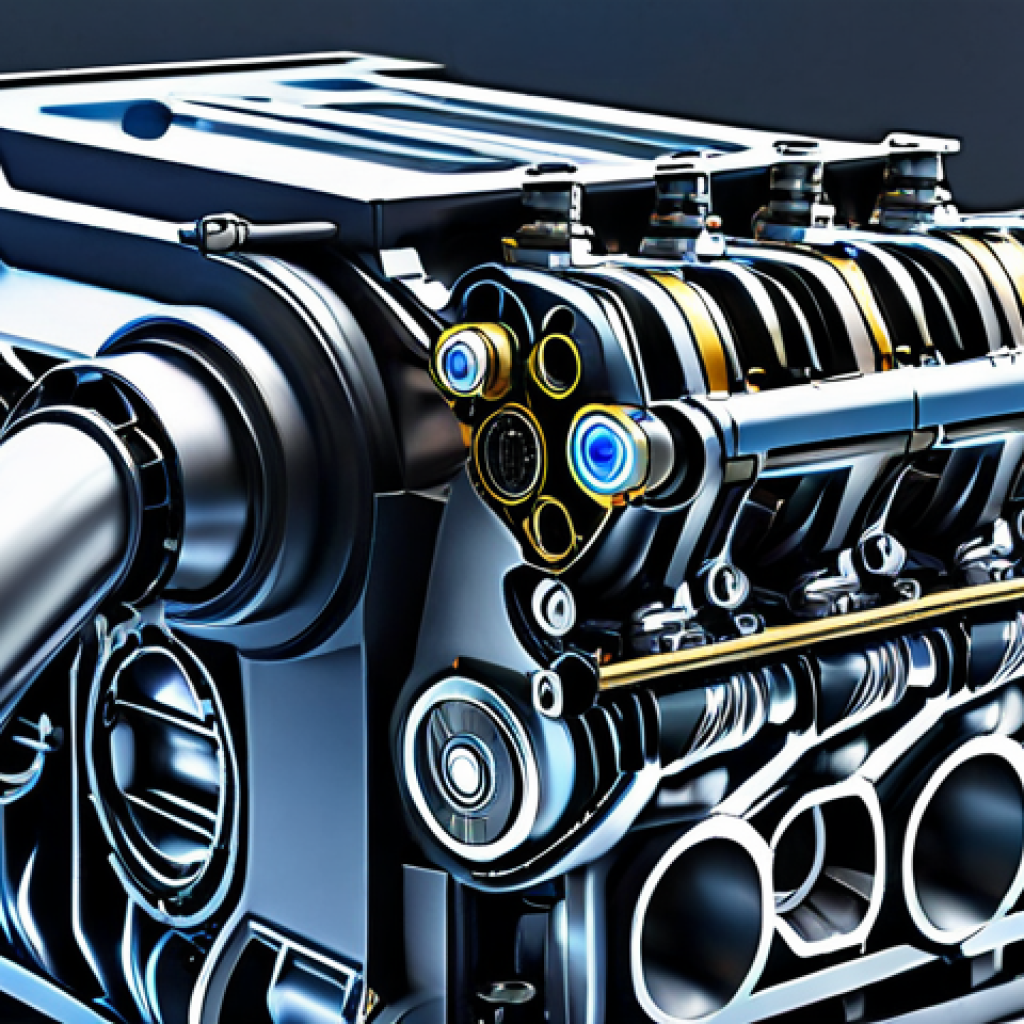
You know that spine-tingling shriek as an F1 car tears down the straight? That isn’t just noise; it’s the raw, unfiltered symphony of one of the most sophisticated pieces of engineering on the planet: the F1 engine.
Having been utterly captivated by Formula 1 for decades, I’ve personally witnessed the relentless evolution of these powerplants, from the screaming V10s to today’s incredibly complex, energy-recovering hybrid V6 turbos.
What always blows my mind isn’t just the sheer horsepower, but the meticulous balance of power, efficiency, and unwavering reliability under unimaginable stress.
With the sport constantly pushing boundaries, especially towards sustainable fuels and the next generation of hybrid technology, understanding these engines means grasping the very future of high-performance motorsport.
It’s a world where every single component is a testament to human ingenuity, pushing the limits of physics and engineering daily. I’ll make sure to tell you for sure!
The Heartbeat of the Beast: More Than Just Cylinders

You know that spine-tingling shriek as an F1 car tears down the straight? That isn’t just noise; it’s the raw, unfiltered symphony of one of the most sophisticated pieces of engineering on the planet: the F1 engine. Having been utterly captivated by Formula 1 for decades, I’ve personally witnessed the relentless evolution of these powerplants, from the screaming V10s to today’s incredibly complex, energy-recovering hybrid V6 turbos. What always blows my mind isn’t just the sheer horsepower, but the meticulous balance of power, efficiency, and unwavering reliability under unimaginable stress. With the sport constantly pushing boundaries, especially towards sustainable fuels and the next generation of hybrid technology, understanding these engines means grasping the very future of high-performance motorsport. It’s a world where every single component is a testament to human ingenuity, pushing the limits of physics and engineering daily. I’ll make sure to tell you for sure!
Diving into an F1 engine feels like peeling back layers of a meticulously crafted onion. It’s not simply about throwing more fuel into a chamber and hoping for the best; it’s an intricate dance of thermodynamics, fluid dynamics, and cutting-edge materials science. When I first started following the sport, the roar of a naturally aspirated V10 was truly something to behold – an almost physical assault on your senses. You could feel the vibrations in your chest as they rocketed past. But seeing how engineers have adapted to new regulations, pivoting to the hybrid era, has been an even more fascinating journey. They haven’t just shrunk the engine; they’ve made it exponentially smarter, extracting every last ounce of energy from every single drop of fuel.
From Raw Power to Surgical Precision: The V6 Turbo Hybrid Era
The transition to the V6 turbo-hybrid regulations in 2014 was nothing short of revolutionary, shaking up the entire sport. Many purists initially lamented the loss of the raw, ear-splitting scream of the V8s and V10s, myself included to some extent. There was a certain visceral thrill that came with that pure, unadulterated noise. However, what we gained in return was an engineering marvel, a testament to efficiency and complex power management. I remember thinking, “How on earth are they going to make a 1.6-liter engine feel as potent as a monstrous V10?” The answer, of course, lies in the ingenious integration of electric power, a concept that was almost alien to F1 at that scale previously. It’s a testament to the sport’s commitment to pushing boundaries, not just in speed, but in technological relevance to the broader automotive world. This smaller, more complex unit requires an entirely different approach to setup and maintenance, making the engineers’ roles even more critical.
The Art of Combustion: Pushing Thermal Efficiency Limits
One of the most jaw-dropping aspects of these modern F1 engines, for someone like me who loves to dig into the technical details, is their incredible thermal efficiency. We’re talking about figures that are well over 50%, sometimes even pushing 60%, for a conventional internal combustion engine! To put that into perspective, your average road car engine struggles to hit 30-35%. This isn’t achieved by magic; it’s the result of relentless optimization of every single parameter: fuel injection timing, combustion chamber design, turbocharger efficiency, and incredibly precise ignition. It’s a pursuit of perfection where every minute detail, every microscopic adjustment, can mean the difference between winning and losing. I often imagine the countless hours engineers spend in darkened rooms, simulating and tweaking, all to squeeze out that extra fraction of a percentage of power from a single drop of fuel. This high efficiency also drastically reduces fuel consumption during a race, which is a major strategic advantage.
| Engine Era | Key Characteristics | Typical Max RPM | Power Output (Approx.) | My Personal Take |
|---|---|---|---|---|
| Early 2000s (V10) | Naturally aspirated, high revving, incredible sound, pure power delivery. | ~19,000 RPM | 800-950 bhp | The iconic shriek that cemented my love for F1. Raw, unfiltered power that shook the grandstands. |
| Late 2000s (V8) | Naturally aspirated, rev limits introduced, focus on efficiency post-V10. | ~18,000 RPM | 750-800 bhp | Still thrilling, but you could feel the regulations starting to tame the beast a little, pushing engineers to innovate elsewhere. |
| 2014 – Present (V6 Turbo Hybrid) | 1.6L V6 Turbo, highly efficient, complex ERS (MGU-K, MGU-H), fuel flow limits. | ~15,000 RPM | 950-1050 bhp (combined) | An engineering marvel! Less sound, perhaps, but a mind-boggling blend of power, cutting-edge tech, and environmental efficiency. |
Unraveling the Hybrid Magic: The Energy Recovery Systems (ERS)
If the internal combustion engine is the beating heart, then the Energy Recovery Systems (ERS) are truly the sophisticated circulatory system of a modern F1 power unit. This is where the real wizardry of the hybrid era shines through, and it’s something that genuinely fascinates me. We’re not just talking about a simple KERS system like in the earlier days; today’s ERS is an incredibly complex network designed to harvest energy that would otherwise be completely wasted, then deploy it strategically for maximum performance. I vividly remember the initial confusion when these systems were first introduced – everyone was trying to wrap their heads around MGU-K, MGU-H, and the strategic deployment of power. It felt like watching a chess game unfold, but at 200 mph, demanding split-second decisions from both the driver and the strategists back in the garage. Understanding these components is key to appreciating modern F1.
The Kinetic Energy Harvester: MGU-K
The MGU-K, or Motor Generator Unit – Kinetic, is perhaps the easiest to grasp because it’s a direct evolution of the KERS units we saw before. It’s essentially an electric motor that’s connected directly to the crankshaft of the engine. When the driver brakes, instead of all that kinetic energy simply being lost as heat, the MGU-K acts as a generator, converting that kinetic energy into electrical energy. This electrical energy is then stored in a high-capacity battery pack. But here’s the clever part: when the driver wants an extra burst of power, say for an overtake or accelerating out of a corner, the MGU-K switches roles and acts as a motor, feeding that stored electrical energy back into the drivetrain. This provides a significant power boost, often around 160 horsepower, for a certain duration per lap. The strategy involved in deploying this energy is critical; a driver who uses it too early might find themselves lacking power at a crucial moment later in the lap, making race craft and energy management intertwined.
Harnessing Heat: The Revolutionary MGU-H
Now, if the MGU-K is clever, the MGU-H, or Motor Generator Unit – Heat, is simply brilliant, and in my opinion, one of the most innovative pieces of technology in modern F1. This unit is connected directly to the turbocharger. Remember how a turbo works? Exhaust gases spin a turbine, which then spins a compressor to force more air into the engine. A huge amount of energy in those exhaust gases is normally just lost as heat. The MGU-H’s job is to recover that waste heat energy. It can act as a generator, converting the heat from the exhaust gases into electrical energy that can be stored in the battery or even sent directly to the MGU-K for instantaneous power deployment. Even more impressively, it can act as a motor, spinning up the turbocharger to eliminate “turbo lag” – that annoying delay before the turbo spools up and delivers power. This is huge for driveability, especially coming out of slow corners, as it provides instant throttle response. The MGU-H truly transformed the feel of these cars and is a key reason why they are so incredibly efficient despite their enormous power output, making it a pivotal component in the modern power unit.
The Unseen War: Engine Reliability Under Extreme Duress
When you watch an F1 race, your eyes are naturally drawn to the daring overtakes, the lightning-fast pit stops, and the sheer speed of these incredible machines. What often goes unnoticed, however, is the relentless, unseen war being fought within the engine bay. An F1 power unit isn’t just about raw power; it’s a meticulously engineered system designed to operate at the absolute ragged edge of its performance envelope for thousands of kilometers, under conditions that would tear apart almost any other engine. We’re talking about components spinning at tens of thousands of RPM, temperatures soaring to astronomical levels, and stresses that defy imagination. I’ve seen enough races where a sudden puff of smoke from the back of a car signals the end of a driver’s championship hopes to truly appreciate just how precarious and hard-won reliability is in this sport. It’s a constant tightrope walk between pushing for more performance and ensuring the engine doesn’t simply detonate under pressure, a balance that requires immense engineering foresight.
The Fine Line of Engineering Tolerance
Every single component within an F1 engine, from the tiny bolts to the massive crankshaft, is designed with a terrifyingly small margin for error. They are pushed to their absolute breaking point, yet expected to perform flawlessly for multiple race weekends. Think about it: a single piston moving up and down thousands of times a minute, subjected to incredible forces of combustion. The materials used are exotic alloys and composites, often developed specifically for this application, far beyond what you’d find in even the most high-performance road cars. The manufacturing tolerances are measured in microns, and the quality control is fanatical. I remember hearing stories about engineers who could spot a flaw in a component just by looking at it, after years of working with these intricate pieces. It’s a testament to the obsession with perfection that defines F1 engineering, where failure is simply not an option if you want to win championships, as every point truly matters in the constructor’s standings.
Managing the Heat: A Constant Battle
Heat is the ultimate enemy of performance and reliability in an F1 engine. As these units generate immense power, they also produce an incredible amount of heat. Managing this heat effectively is a constant battle for engineers. They design intricate cooling systems, carefully route airflow, and employ advanced lubricants to keep temperatures within their optimal operating window. If an engine runs too hot, components degrade rapidly, and catastrophic failure becomes imminent. Conversely, running too cold means inefficient combustion and a loss of power. It’s a delicate balance, and teams spend countless hours optimizing radiator designs, intake geometries, and even the cooling liquid itself to find that perfect equilibrium. I often wonder about the sheer courage of the drivers, knowing that just behind them is a power unit operating on such a knife-edge, a controlled explosion just waiting to unleash its full fury, lap after intense lap.
Fueling the Future: F1’s Green Revolution and Biofuels
It’s fascinating to observe how Formula 1, often perceived as a gas-guzzling spectacle, is actually at the forefront of automotive sustainability. While the cars still scream around the track, the sport is making massive strides towards a greener future, particularly with its commitment to sustainable fuels. This isn’t just lip service; it’s a deeply ingrained part of the sport’s identity moving forward, driven by both environmental responsibility and the desire to remain relevant to the broader automotive industry. For someone like me who has followed F1 for decades, witnessing this shift from pure performance obsession to a balanced approach that includes environmental impact has been truly inspiring. It shows that even the pinnacle of motorsport can evolve and contribute meaningfully to global challenges, setting an example for other industries to follow suit.
The Road to Net-Zero: Synthetic and Biofuels
F1 has set an ambitious target: to be net-zero carbon by 2030. A massive part of achieving this will come from the fuel itself. From 2026, the sport plans to use 100% sustainable fuels, meaning they will be either advanced biofuels or synthetic fuels made using carbon capture technology. This is genuinely groundbreaking. We’re talking about fuels that effectively create a closed carbon loop; the CO2 released during combustion is equal to the CO2 removed from the atmosphere to create the fuel in the first place. I remember the skepticism when these targets were first announced – “How can you have sustainable fuels that still deliver F1 levels of performance?” But the engineers are proving it’s entirely possible, pushing the boundaries of fuel chemistry and engine design in tandem. It’s a real-world laboratory for technologies that could one day power our everyday vehicles, which is incredibly exciting and offers a tangible benefit beyond the racetrack.
Beyond the Track: F1’s Impact on Automotive Innovation
What I find particularly compelling about F1’s sustainable fuel initiative is its potential for trickle-down technology. This isn’t just about racing; it’s about pioneering solutions that can benefit society as a whole. If F1 can develop and prove high-performance sustainable fuels under the most extreme conditions, it builds confidence and accelerates adoption in the broader automotive sector. Imagine filling up your car with a fuel that’s been proven on the world’s most demanding circuits, knowing it has a minimal carbon footprint. This commitment really elevates F1 beyond just a sport; it positions it as a genuine research and development platform for future mobility. It gives me a sense of pride that my favorite sport isn’t just entertaining, but also actively contributing to a better planet, demonstrating how high-performance can coexist with environmental responsibility.
The Human Element: Designers, Engineers, and the Pursuit of Perfection
While we often marvel at the incredible machines on track, it’s absolutely crucial to remember the countless human hours, the sheer brainpower, and the relentless dedication that goes into creating every single F1 engine. This isn’t just about sophisticated machinery; it’s a testament to human ingenuity, collaboration, and an almost obsessive pursuit of perfection. As someone who’s always been fascinated by the ‘how’ and ‘who’ behind these technological marvels, I’ve come to deeply admire the engineers and designers who breathe life into these power units. They are the unsung heroes of Formula 1, working tirelessly behind the scenes, often under immense pressure and secrecy, to shave off milliseconds or eke out an extra horsepower. Their passion is truly palpable, fueling an entire industry built on pushing boundaries.
The Mind-Bending Challenge of Miniaturization and Power
Picture this: an engine that produces over 1000 horsepower, revs to 15,000 RPM, and yet is compact enough to fit snugly within the confines of an F1 chassis. This isn’t just a design challenge; it’s a mind-bending puzzle that requires engineers to think outside the box, to innovate with materials, and to exploit every conceivable physical principle. I’ve heard stories from engineers about late nights, countless simulations, and the sheer elation of finally seeing a design come to life on the dyno, knowing that every component had to be perfect to achieve those incredible power figures within such tight packaging constraints. It’s an environment where incremental gains are celebrated as monumental victories, and every problem is an opportunity for groundbreaking innovation, often leading to patents that redefine what’s possible in automotive engineering.
The Constant Cycle of Iteration and Improvement
F1 engine development isn’t a static process; it’s a relentless, never-ending cycle of iteration, testing, and improvement. As soon as one season ends, or even midway through, work has already begun on the power unit for the following year, or even two years down the line. Teams gather vast amounts of data from every single lap, every single sensor reading, and feed that information back into the design process. This constant feedback loop allows them to identify weaknesses, optimize performance, and fine-tune every aspect of the engine. It’s like watching evolution in fast-forward, driven by the intense competitive pressure of Formula 1. This continuous strive for perfection, where ‘good enough’ is never truly good enough, is what truly sets F1 engineering apart and keeps me utterly captivated by the sport, year after year.
The Material Science Marvel: Enduring Unimaginable Forces
If you were to hold a piece of an F1 engine in your hand, you might just see a piece of metal, but what you’re actually holding is a testament to cutting-edge material science. These components are subjected to forces and temperatures that are truly unimaginable in almost any other application. From the piston crowns that face combustion temperatures hot enough to melt steel, to connecting rods enduring thousands of cycles of violent acceleration and deceleration, every part must be engineered from materials that push the very boundaries of known metallurgy and composites. For a long-time fan like myself, the whispered anecdotes about exotic alloys, secret manufacturing processes, and the pursuit of microscopic perfection are just as thrilling as the on-track action. It’s a world where material properties aren’t just important; they are absolutely fundamental to performance and survival, acting as the silent guardians of speed.
Forged for Extremes: Exotic Alloys and Composites
Gone are the days of simple steel or aluminum blocks. Modern F1 engines utilize a bewildering array of exotic, high-strength, lightweight materials. We’re talking about specialist nickel-based alloys for turbine blades that can withstand extreme temperatures, bespoke titanium alloys for connecting rods and valves, and carbon composites for structural elements. These materials aren’t just off-the-shelf; they are often developed in collaboration with leading aerospace and defense companies, tailored precisely for the unique demands of an F1 power unit. The process of forging, casting, and machining these materials is incredibly precise, often involving electron beam melting or 3D printing techniques to create geometries that would be impossible with traditional manufacturing. It truly feels like science fiction brought to life, all in the service of going faster and lasting longer under brutal conditions, a testament to the boundless innovation in this field.
The Microscopic Battle Against Wear and Tear
Even with the most advanced materials, wear and tear are constant threats. This is where surface engineering and advanced coatings come into play. Components are often treated with incredibly thin, yet super-hard, coatings to reduce friction and resist abrasion. Think about the friction between a piston ring and the cylinder wall, or the minuscule clearances in a turbocharger bearing. These are areas where every micrometre of wear can lead to a significant loss of performance, or worse, catastrophic failure. Engineers employ everything from diamond-like carbon (DLC) coatings to ceramic treatments to ensure parts can endure the incredible stresses they face. I often imagine the microscopic battles happening within the engine, where atoms are constantly fighting against the forces of nature, all meticulously managed by human ingenuity to keep the machine running perfectly, even when pushed to its absolute limits.
Beyond Horsepower: The Aerodynamic Symphony and Engine Integration
While we obsess over the raw power figures of an F1 engine, it’s crucial to understand that horsepower alone doesn’t win races. The true magic lies in the seamless, almost symbiotic integration of the power unit with the rest of the car, particularly its aerodynamics. An F1 car is not just an engine with wheels; it’s a complete, holistic package, a symphony where every component plays a vital role. For me, witnessing how teams meticulously craft the entire rear of the car around the engine, aiming for every possible aerodynamic gain, is just as captivating as the engine itself. It highlights the genius of F1 design, where compromise is a dirty word and every cubic centimeter is optimized for performance, making the power unit a structural and aerodynamic component, not just a motive force.
Packaging Perfection: Minimizing Aerodynamic Impact
The pursuit of aerodynamic efficiency dictates a huge amount of engine design. Engine manufacturers don’t just build a power unit; they build a power unit that can be packaged as tightly and cleanly as possible within the chassis. This means designing components that are incredibly compact, routing exhaust systems in specific ways to influence airflow, and positioning radiators and cooling inlets to minimize drag while still providing sufficient cooling. The goal is to create the narrowest possible ‘coke bottle’ shape at the rear of the car, allowing for maximum airflow over the diffuser and rear wing, which generates crucial downforce. I’ve seen design concepts where engineers have literally molded the engine to the shape of the chassis, or integrated parts of the engine block into the structural elements, all in the name of aero. It’s a relentless drive for miniaturization and integration, where every millimeter counts and compromises in packaging can cost valuable lap time.
Exhaust Blown Aerodynamics: A Clever Synergy
Remember the era of exhaust-blown diffusers? That was a brilliant example of engine integration directly influencing aerodynamics. While the rules have since changed to limit this, it showcased how exhaust gases, once just waste, could be actively used to enhance downforce. Even today, the way exhaust plumes are managed and directed is carefully considered. The shape of the engine cover, the position of the exhaust exits, and how they interact with the rear wing are all part of a complex aerodynamic dance. It’s a testament to the comprehensive approach of F1 engineering: it’s never just about one component; it’s about how everything works together in perfect harmony. This holistic view, where engine designers work hand-in-hand with aerodynamicists, is what produces those incredible lap times we see every weekend, turning the engine into an active aero device.
Closing Thoughts
As we pull back from the intricate world beneath the engine cover, it’s clear that the F1 power unit is far more than just a collection of mechanical parts; it’s a living, breathing testament to human ingenuity and the relentless pursuit of perfection. Every rev, every boost of power, every battle against thermal degradation is a symphony of engineering prowess. Having followed this journey for so long, I find myself continually amazed by the sheer dedication of the men and women who push these boundaries, not just for speed, but for efficiency and sustainability. The future of F1 engines, with its focus on advanced biofuels and even greater energy recovery, promises an even more thrilling and relevant spectacle, ensuring the heartbeat of the beast continues to inspire for generations to come.
Useful Information
1. Modern F1 engines are 1.6-liter V6 Turbo Hybrids, achieving over 50% thermal efficiency, significantly higher than typical road cars (around 30-35%).
2. The Energy Recovery Systems (ERS) consist of the MGU-K (Kinetic, recovers braking energy) and MGU-H (Heat, recovers turbo heat and eliminates lag), providing substantial power boosts.
3. Formula 1 is committed to using 100% sustainable fuels from 2026, aiming for net-zero carbon emissions by 2030, making it a real-world laboratory for future automotive fuels.
4. F1 engines utilize exotic materials like specialist nickel-based alloys, bespoke titanium, and advanced composites, pushing the boundaries of material science for extreme performance and durability.
5. Engine design is heavily influenced by aerodynamics; tight packaging and clever exhaust routing are crucial for optimizing airflow around the car and maximizing downforce.
Key Takeaways
F1 engines are an unparalleled blend of extreme power, cutting-edge hybrid technology, and remarkable thermal efficiency. Their design is a testament to human ingenuity, pushing the limits of materials and engineering. Reliability under immense stress is paramount, demanding microscopic precision. The sport is actively pioneering sustainable fuels, showcasing its commitment to environmental responsibility. Ultimately, these power units are a holistic component of the car, intricately integrated with aerodynamics, reflecting a relentless pursuit of perfection on and off the track.
Frequently Asked Questions (FAQ) 📖
Q: You mentioned the incredible evolution from those screaming V10s to today’s complex hybrid V6 turbos. What, in your opinion, was the most significant driver behind such a radical change in F1 engine philosophy?
A: Oh, that’s a question that brings back so many memories, and frankly, a bit of nostalgia for that V10 roar! From my vantage point, watching this sport for decades, the biggest driver wasn’t just about going faster – though that’s always a given in F1.
It was fundamentally about relevance and sustainability. The world was shifting, and the automotive industry was heading towards greener, more efficient technologies.
F1, being the pinnacle of motorsport engineering, couldn’t afford to be seen as a dinosaur guzzling fuel. So, the push for energy recovery systems, for extracting insane power from smaller, more efficient engines, became paramount.
It wasn’t just regulations; it was a visionary step by the sport to prove its worth as a living, breathing laboratory for future road car tech. It hurt to lose that sound, I won’t lie, but seeing what they’ve achieved with these incredibly efficient, powerful, and yes, still incredibly loud, hybrid beasts?
That’s a whole new level of engineering marvel.
Q: Given how incredibly powerful these F1 engines are, how do they manage to maintain any sort of reliability under such extreme race conditions? It seems almost counter-intuitive.
A: “Counter-intuitive” is absolutely the right word! It truly boggles my mind sometimes too. You’ve got these tiny 1.6-liter engines pushing over 1,000 horsepower, revving to astronomical limits, and running for hours, race after race.
My personal take, having followed the technical side so closely, is that it’s down to an almost insane level of perfectionism and meticulous detail at every single stage.
It’s not just about using exotic materials, although they do that. It’s about understanding every single microsecond of stress, heat, and vibration. I’ve seen teams struggle in early hybrid eras, power units failing spectacularly.
But the relentless pursuit of reliability through simulation, exhaustive testing on dynos that mimic race conditions, and an integrated design where electronics and software are as critical as the physical components, that’s what makes the difference.
When you see a car finish a whole season with relatively few engine penalties, it’s not luck – it’s a testament to thousands of hours of sheer brilliance and dedication.
It really is a modern engineering miracle, every single time.
Q: You talked about the future, especially sustainable fuels and next-gen hybrid tech. What’s the biggest game-changer you anticipate for F1 engines in the coming years, beyond what we see today?
A: Oh, this is the part that truly excites me about F1’s future! We’ve seen the start with E10 fuel, but the real game-changer, the one that F1 is absolutely committed to and pushing hard for by 2026, is the widespread adoption of 100% sustainable fuels.
This isn’t just about using a bit of biofuel; we’re talking about advanced synthetic fuels, or “e-fuels,” made from things like captured CO2 and renewable energy.
Imagine a car running on fuel that effectively recycles carbon, potentially making the entire lifecycle carbon-neutral, or even carbon-negative! This is huge, not just for the sport’s carbon footprint, but for the wider automotive industry, showing a viable path for internal combustion engines in a net-zero future.
As for the hybrids, they’ll become even more sophisticated, squeezing out every last ounce of efficiency and energy recovery, probably with an even greater emphasis on the electrical side.
F1 has always been a proving ground, and watching them tackle one of the biggest challenges facing our planet through these incredible power units? That’s utterly captivating to me.
📚 References
Wikipedia Encyclopedia
구글 검색 결과
구글 검색 결과
구글 검색 결과
구글 검색 결과
구글 검색 결과