Hey racing fanatics and history buffs! Ever wondered what makes a race not just a competition, but a living legend? For me, the moment I first learned about the Le Mans 24 Hours, I was absolutely captivated.
It’s more than just cars zooming around for a full day; it’s a crucible of innovation, a testament to human endurance, and a stage for some of the most breathtaking drama motorsport has ever seen.
We’re talking about a race that has shaped automotive engineering, challenged drivers and teams to their absolute limits, and created moments that are etched forever in time.
Seriously, if you think Formula 1 is intense, wait until you dive into the sheer scale of Le Mans. It’s a journey through speed, strategy, and pure grit that began almost a century ago and continues to push the boundaries of what’s possible, influencing everything from your daily driver’s headlights to hybrid engine technology.
Knowing its past truly helps you appreciate the future of racing. Curious to explore the incredible sagas, the legendary machines, and the unforgettable heroes that built the Le Mans legacy?
Let’s uncover the full story and see why this race remains the ultimate challenge.
The Unyielding Spirit of Sarthe
Where Legends Are Forged
When you talk about endurance racing, Le Mans isn’t just a race; it’s a living, breathing entity. I honestly believe that the circuit de la Sarthe itself imbues a certain magic into every car and driver that dares to challenge it.
For me, the real magic isn’t just the sheer speed or the incredible technology, but the stories that unfold over 24 grueling hours. Imagine the roar of engines echoing through the night, the flash of headlights cutting through the darkness, and the constant pressure on both man and machine.
It’s a place where legends aren’t just born, they’re forged in the fires of competition and sheer willpower. Every corner, every straight, every single moment adds to a rich tapestry of history, filled with triumphs that make you cheer and heartbreaks that bring a tear to your eye.
It’s a testament to human ingenuity and perseverance, pushing the boundaries of what’s possible in motorsports. I’ve always been fascinated by how the atmosphere transforms from a bustling day into an almost ethereal night race, then back again, all while the clock keeps ticking.
The very air around the track feels thick with anticipation and history.
The Circuit’s Call: A Dance with Danger
You know, it’s funny how a track can have so much personality. The Circuit de la Sarthe isn’t just asphalt and chicanes; it’s a character in its own right, constantly demanding respect from even the most seasoned drivers.
It’s a brutal, unforgiving mistress that tests every single facet of a racing team. From the lightning-fast Mulsanne Straight, where cars used to hit incredible speeds before the chicanes were added, to the tricky Porsche Curves, it’s a constant dance with danger.
I can only imagine the sheer focus it takes to navigate those turns lap after lap, hour after hour, especially in the dead of night when fatigue starts to creep in.
I remember reading about drivers who swear the track whispers to them, pushing them further. It’s a dangerous game, for sure, but that’s part of its allure, isn’t it?
The sheer audacity of driving at such speeds for so long, flirting with the very edge of disaster. It’s this raw, unfiltered challenge that separates Le Mans from almost any other race in the world.
Engineering Marvels on Four Wheels
From Raw Power to Aerodynamic Grace
Le Mans has always been the ultimate proving ground for automotive innovation. It’s not just about who has the biggest engine, though horsepower certainly helps!
I’ve always been amazed at how this race pushes manufacturers to innovate across the board. Think about it: early cars were essentially souped-up roadsters, but over the decades, we’ve seen everything from monstrous V12s to tiny, efficient rotary engines, and now, incredible hybrid powertrains.
Every single component, from the tires gripping the tarmac to the suspension absorbing the bumps, and especially the aerodynamics slicing through the air, has been refined and perfected on this very track.
It’s like a live, 24-hour research and development lab. I personally believe that the advancements we see in Le Mans often trickle down to the cars we drive every day.
For instance, enhanced headlight technology, which is crucial for night driving in Le Mans, has certainly made our daily commutes safer and clearer. It’s a constant arms race of technology, where every team is trying to find that marginal gain, that tiny edge that could mean the difference between victory and defeat.
The Silent Revolution: Hybrid Power Takes Hold
If you’ve been following Le Mans recently, you can’t help but notice the seismic shift towards hybrid and even fully electric technology. It’s honestly mind-boggling to see how far we’ve come.
I remember when the idea of a hybrid race car seemed almost fantastical, but now, they’re dominating. Teams like Porsche and Audi, and more recently Toyota, have truly pioneered hybrid systems that recapture energy during braking and deploy it for bursts of acceleration.
This isn’t just about being “green”; it’s about pure, unadulterated performance and efficiency. Managing fuel consumption over 24 hours is absolutely critical, and these hybrid systems offer a significant advantage, allowing cars to go further on less fuel, or provide an extra boost when overtaking.
It’s a delicate ballet of power management, and seeing these complex machines perform flawlessly for a full day is a testament to incredible engineering.
It makes you wonder what the next big leap will be, doesn’t it? I wouldn’t be surprised to see hydrogen power or even more advanced electric solutions making waves in the near future, all thanks to the rigorous demands of Le Mans.
The Human Element: Drivers Pushing Beyond Limits
The Iron Men Behind the Wheel
While the cars are undoubtedly magnificent, let’s be real: it’s the drivers who are the true gladiators of Le Mans. I honestly don’t know how they do it.
Imagine being strapped into a cockpit for hours on end, battling G-forces, immense heat, deafening noise, and constant vibration, all while maintaining pinpoint precision at speeds well over 200 mph.
It’s not just physical; the mental fortitude required is simply staggering. I’ve always admired the sheer endurance of these athletes. It’s not just about speed; it’s about consistency, knowing when to push and when to conserve, and making split-second decisions that could mean the difference between staying on track and a catastrophic crash.
Many drivers talk about entering a state of hyper-focus, almost a trance, to keep going through the night. It’s a level of commitment and sacrifice that truly sets them apart.
They train relentlessly, both physically and mentally, to prepare for this ultimate test, and seeing them cross the finish line, often looking utterly spent but utterly triumphant, is truly inspiring.
Mastering the Mind: Strategy and Stamina
Beyond the raw physical demands, Le Mans is a mind game of epic proportions. It’s like a 24-hour chess match played at breakneck speeds. I once heard a driver describe it as “managing fatigue without losing pace,” and that really stuck with me.
The best teams aren’t just about fast cars; they’re about impeccable strategy. When do you pit? When do you change tires?
Who drives the crucial night stints? These decisions can make or break a race. Drivers have to manage their own energy levels, communicate effectively with their engineers, and adapt to constantly changing track conditions – from bright sunshine to torrential rain, sometimes within minutes.
It’s a testament to their mental resilience. I always find it fascinating to watch how different drivers approach their stints, some aggressive, some methodical, but all driven by an unyielding desire to win.
It’s truly a test of how well humans can cooperate and perform under the most extreme pressure.
Iconic Duels and Unforgettable Moments
Ford vs. Ferrari: A Rivalry for the Ages
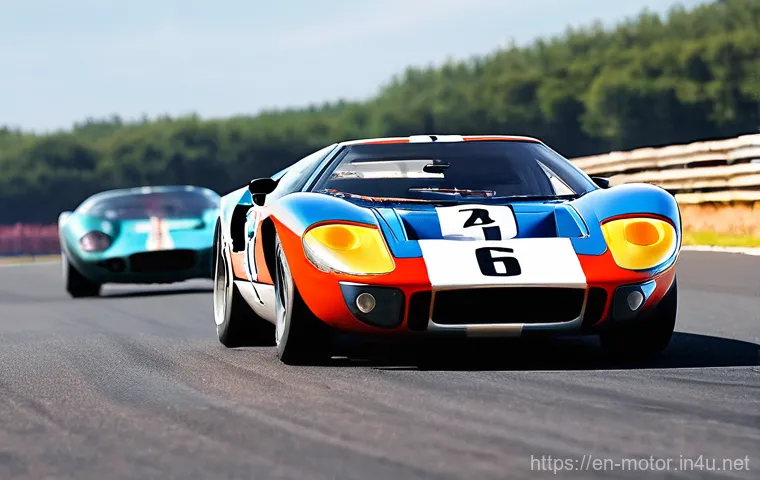
If you’re a motorsport fan, you’ve undoubtedly heard of the legendary Ford vs. Ferrari battles of the 1960s. For me, that era encapsulates everything thrilling about Le Mans.
It wasn’t just a race; it was a transatlantic corporate grudge match, fueled by ambition, pride, and a whole lot of American muscle taking on Italian elegance.
I remember watching documentaries about it, almost feeling the tension in the air. Ford, after failing to buy Ferrari, decided to beat them at their own game on the biggest stage.
The sheer audacity of it! The drama, the engineering challenges, the incredible driving – it had all the ingredients for an epic saga. The image of the Ford GT40s crossing the finish line together in 1966 is burned into my memory as one of the most iconic moments in racing history.
It wasn’t just a victory; it was a statement, a changing of the guard, and a story that continues to captivate generations. That kind of raw, passionate rivalry is what makes Le Mans so much more than just a competition.
The Unexpected Victories and Heartbreaking Defeats
Le Mans has a knack for producing the most incredible highs and the most devastating lows, often within minutes of each other. I’ve seen races where a car seemingly cruises to victory only to break down on the very last lap, snatching defeat from the jaws of triumph.
Conversely, there are those underdog stories that just make your heart swell. Who could forget Mazda’s improbable win with the rotary-powered 787B in 1991, defying all expectations?
Or the various times a privateer team, against all odds, managed to upset the factory giants. These are the moments that truly define the spirit of Le Mans for me.
It’s a harsh mistress, this race, and it truly doesn’t care about reputations or budgets; it demands performance and a bit of luck. The sheer emotion you see on the faces of drivers and team members, whether celebrating an unexpected victory or consoling each other after a heartbreaking retirement, is palpable.
It’s a stark reminder that even with all the technology and preparation, a 24-hour race is incredibly unpredictable.
Le Mans’ Legacy: Shaping Tomorrow’s Automotive World
Road Car Innovation Born on the Track
It’s easy to think of race cars as completely separate from the vehicles we drive every day, but Le Mans has a fantastic track record of influencing road car development.
I always find it fascinating how racing pushes boundaries that eventually benefit all of us. Think about disc brakes, for example; they were tested and perfected in the grueling conditions of Le Mans before becoming standard in passenger cars.
Or advancements in tire technology, lightweight materials, and even aerodynamic principles. It’s not just the big, flashy stuff, either. Even small improvements in fuel efficiency or reliability, honed over 24 hours of extreme stress, find their way into our daily drivers.
I personally see the value in this “race to road” transfer, as it means the innovations that make race cars faster and safer ultimately make our own cars better.
It’s like a massive, ongoing experiment with the best engineers and drivers in the world pushing the limits.
Safety First: Lessons Learned from Speed
Beyond performance, one of Le Mans’ most enduring legacies is its contribution to automotive safety. The speeds involved mean that safety has always been paramount, and tragically, lessons have sometimes been learned the hard way.
However, these lessons have led to incredible advancements. From improved chassis designs that better protect drivers in crashes, to advanced fire suppression systems and more robust barriers around the track, the pursuit of speed has inadvertently driven the evolution of safety.
Even the understanding of driver fatigue and the protocols for driver changes have improved over the years, contributing to a safer environment for everyone.
It’s a sobering thought that some of these safety innovations stemmed from accidents, but it’s also incredibly reassuring to know that the data and experience gained at Le Mans have made our roads and race tracks safer for everyone.
The continuous pursuit of both speed and safety is a delicate balance, and Le Mans constantly pushes that envelope.
The Evolution of Endurance: From Piston to Hybrid
The Roaring Twenties to Turbocharged Titans
Tracing the evolution of Le Mans is like taking a journey through automotive history itself. Starting way back in the 1920s, the race was a vastly different beast.
Cars were open-cockpit, drivers often wore leather helmets, and the technology, while cutting-edge for its time, was rudimentary by today’s standards.
I can only imagine the sheer physical toll on those early drivers! As the decades rolled on, we saw massive leaps: closed cockpits for aerodynamics and safety, powerful supercharged engines in the 30s, the post-war dominance of Jaguar and Ferrari, and then the incredible push for speed in the 60s and 70s with ever-more powerful engines and aerodynamic shapes.
The 80s brought the turbocharged beasts of Group C, cars that were almost unbelievably fast. Each era has its own iconic sound, its own distinctive look, and its own set of challenges that pushed technology forward.
It’s truly remarkable to see how the definition of “fast” and “enduring” has continuously been redefined over the years, all thanks to the crucible of Le Mans.
The sights and sounds of each era are so distinct, it’s almost like visiting a different planet, yet the core challenge remains the same.
A Greener Future: Electric Dreams at Le Mans
As much as I adore the roaring V8s and screaming V12s of yesteryear, the current shift towards more sustainable racing at Le Mans is incredibly exciting.
It’s not just about hybrid powertrains anymore; we’re talking about a genuine commitment to a greener future. I’ve been following the developments closely, and the conversations around fully electric or hydrogen-powered prototypes are getting more serious.
Imagine a silent, incredibly fast Le Mans race! It might sound strange to long-time fans, but the innovation potential is simply off the charts. The endurance aspect of Le Mans makes it the perfect test bed for these emerging technologies, forcing engineers to solve real-world problems related to battery life, charging infrastructure, and energy efficiency.
I truly believe that the solutions pioneered at Le Mans today will be shaping the electric vehicles we’ll all be driving in the next decade. It’s a bold new chapter for the race, blending its rich history with an unwavering gaze towards the future of automotive performance and sustainability.
Behind the Scenes: The Unsung Heroes of Le Mans
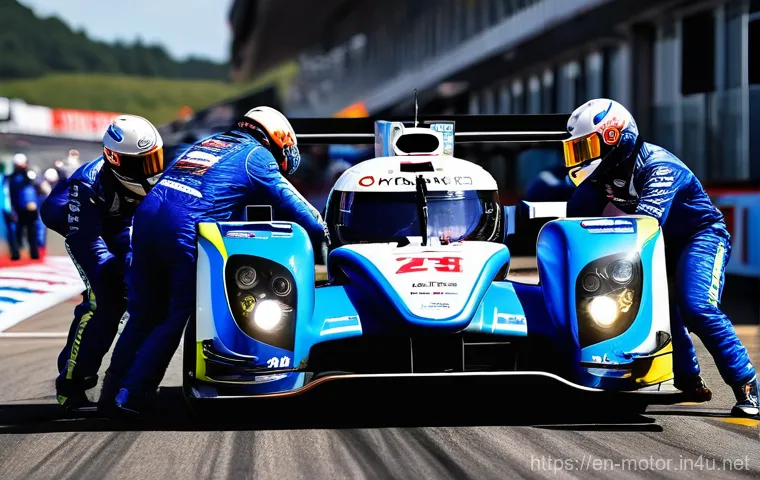
The Pit Crew: A Symphony of Speed and Precision
When you watch Le Mans, it’s easy to focus on the cars and drivers, but for me, the pit crew are the unsung heroes of this incredible race. Their work is a ballet of speed, precision, and coordination.
Imagine swapping four tires and refueling a car in mere seconds, all while maintaining perfect safety protocols. It’s an incredible feat of teamwork that can genuinely win or lose a race.
I remember seeing a pit stop where a single misstep, a dropped wheel nut, cost a team precious seconds, and ultimately, a podium finish. It just goes to show how every single person, every single movement, matters.
They train tirelessly, often practicing hundreds of pit stops to shave off fractions of a second. The pressure on them is immense, especially in the dead of night when visibility is poor and fatigue sets in.
Their unwavering dedication, working through the darkness and the cold, is a testament to the collective effort required to conquer Le Mans.
Team Principals: The Architects of Victory
While drivers get the glory and mechanics get their hands dirty, the team principals and strategists are the masterminds pulling all the strings from behind the scenes.
They’re the architects of victory, making crucial decisions about race strategy, driver rotations, and managing the monumental logistics of a 24-hour race.
It’s like conducting a massive orchestra, ensuring every instrument is in tune and playing its part perfectly. I’ve always been fascinated by the sheer amount of planning and contingency thinking that goes into Le Mans.
What if it rains? What if there’s a safety car? What if a rival team tries an unexpected strategy?
These leaders have to think several steps ahead, constantly adapting to an ever-changing environment. Their ability to remain calm under immense pressure and make quick, informed decisions can often be the difference between hoisting the trophy and going home empty-handed.
They embody the strategic depth of Le Mans, proving that brains are just as important as brawn in endurance racing.
| Innovation/Feature | Impact on Le Mans | Road Car Application |
|---|---|---|
| Disc Brakes | Revolutionized braking efficiency and endurance, crucial for heavy braking zones at high speeds. | Standardized in almost all modern passenger vehicles for superior stopping power and safety. |
| Aerodynamics | Developed to reduce drag and increase downforce for stability at extreme speeds, crucial on Mulsanne Straight. | Improved fuel efficiency, reduced wind noise, and enhanced stability in everyday cars. |
| Hybrid Powertrains | Introduced energy recovery systems for bursts of power and improved fuel economy, dominating LMP1 era. | Pioneered efficient and powerful hybrid engines for mainstream consumer electric and hybrid vehicles. |
| Headlight Technology | Enhanced visibility during night racing, essential for driver safety and maintaining pace in darkness. | Led to brighter, more efficient, and adaptive headlight systems in production cars (e.g., LED, Laser). |
| Lightweight Materials (Carbon Fiber) | Reduced vehicle weight for increased speed and improved structural rigidity for safety. | Used in high-performance road cars and increasingly in mainstream vehicles for weight reduction and strength. |
Wrapping Things Up
And there you have it, folks! Le Mans isn’t just a race; it’s a monumental saga that unfolds every year, a true testament to the relentless spirit of innovation, courage, and teamwork. For me, it embodies the very best of humanity’s drive to push limits, not just on the track but in how we approach technology and overcome challenges. It’s a spectacle that genuinely resonates deeply, pulling you into its rich tapestry of history and breathtaking moments. Every time I think about Le Mans, I’m reminded that it’s far more than just cars going around a circuit; it’s a living legend, continuously writing new chapters of triumph and heartbreak.
Useful Information to Know
1. Understanding the Classes: Le Mans features different racing classes, primarily Hypercar (the top prototype class), LMP2 (another prototype class), and LMGT3 (for grand touring cars). Each class has specific regulations, and understanding them helps you appreciate the diverse strategies and competition within the overall race. It’s like multiple races happening at once, each with its own intense battles.
2. The 24 Hours aren’t just for cars: While the drivers and cars are the stars, the entire event is a massive festival. Many spectators camp out, enjoy live music, and immerse themselves in the carnival-like atmosphere around the circuit. It’s a full-on cultural experience, not just a sporting event, and getting there early to soak it all in truly enhances the magic.
3. Night Driving is Key: A huge part of Le Mans’ challenge and allure is the long hours of night racing. Drivers battle fatigue and reduced visibility, making precision and mental fortitude even more critical. This is where teams often gain or lose ground, as maintaining consistent pace in the dark is incredibly difficult and requires a unique skill set from the drivers.
4. Safety Car Periods are Strategic: Unlike some races where safety cars are seen as interruptions, in endurance racing like Le Mans, they’re often strategic opportunities. Teams use these periods to pit, refuel, and make driver changes with minimal time loss to rivals, making every safety car deployment a crucial strategic puzzle for the pit wall.
5. Beyond the Podium: The Spirit of Finishers: While winning is everything, simply finishing the 24 Hours of Le Mans is considered a monumental achievement. Many teams, especially privateers, set their sights on crossing the finish line after a full day of racing, regardless of their position. It’s a testament to the brutal nature of the event and the incredible effort involved in conquering the Sarthe.
Key Takeaways
Le Mans is an unparalleled endurance challenge that profoundly impacts the automotive world. From its unforgiving circuit design to its role as a crucible for cutting-edge engineering, the race continuously pushes the boundaries of what’s possible on four wheels. I’ve always been amazed by how it perfectly blends the raw power of machinery with the sheer resilience and strategic brilliance of the human spirit.
The race serves as a real-world, high-stakes laboratory, driving innovations in everything from hybrid powertrains and aerodynamics to safety features that eventually find their way into the cars we drive every day. It’s not just about winning; it’s about pushing the envelope for the entire industry. This constant evolution is what keeps me utterly captivated, year after year, as we witness the future of mobility being tested in the most extreme conditions.
Ultimately, Le Mans reminds us that true success in endurance racing, much like in life, requires more than just speed; it demands meticulous preparation, unwavering teamwork, and an almost superhuman ability to adapt and overcome unforeseen obstacles. It’s a powerful narrative of human ingenuity and sheer grit, cementing its place as an iconic event that transcends mere sport and becomes a legendary saga.
Frequently Asked Questions (FAQ) 📖
Q: What exactly makes the Le Mans 24 Hours such a globally recognized and legendary event in the world of motorsport?
A: Oh man, where do I even start? For me, Le Mans isn’t just another race; it’s practically a pilgrimage for anyone who loves cars and the sheer spirit of human endeavor.
What makes it legendary is baked right into its core: it’s a 24-hour non-stop test of endurance. Think about that for a second – a full day and night of cars running flat out!
It’s the world’s oldest active endurance racing event, kicking off way back in 1923, and it’s even part of the “Triple Crown of Motorsport” alongside the Monaco Grand Prix and the Indy 500, which tells you just how prestigious it is.
But it’s more than just age or duration. It’s the ultimate proving ground for both man and machine. Drivers push their physical and mental limits, battling fatigue and the ever-changing conditions of the Circuit de la Sarthe, which, get this, is partly made up of public roads!
I mean, imagine tearing down the Mulsanne Straight at insane speeds, only for it to be a regular road the rest of the year. The winner isn’t just the fastest; it’s the car and team that cover the greatest distance in those 24 grueling hours, blending pure speed with incredible reliability and flawless strategy.
It’s a true spectacle, drawing hundreds of thousands of fans who turn the whole weekend into one massive, unforgettable party. You feel the history, the grit, and the passion in every single lap.
Q: How has the Le Mans 24 Hours race contributed to the cars we drive every day?
A: This is one of my absolute favorite aspects of Le Mans! It’s not just about bragging rights; Le Mans has been a real-world laboratory for automotive innovation since its inception.
The Automobile Club de l’Ouest (ACO), who organizes the race, actually designed the rules with this in mind: to encourage manufacturers to build sporty and reliable cars.
Seriously, if a technology can survive 24 hours of hell at Le Mans, it’s probably good enough for your daily commute. Think about it: things we now take completely for granted in our road cars, like disc brakes, fog lamps, front-wheel drive, and even radial tires, all made their debut or were extensively proven at Le Mans.
I remember learning that Audi showcased direct-injection petrol engines at Le Mans in 2001, and by 2003, that TFSI badge was appearing on their production models!
And those super bright, energy-efficient LED and laser headlights on modern cars? Yep, those were refined and tested under the extreme conditions of Le Mans night racing before making their way to the street.
More recently, Le Mans has been a hotbed for hybrid technology, with manufacturers like Toyota and Porsche pushing the boundaries of combining internal combustion with electric powertrains, which is a huge deal for fuel efficiency and sustainability in the cars we see today.
It’s genuinely thrilling to know that the cutting-edge tech pushing limits on the track today will eventually make our everyday drives safer, more efficient, and more enjoyable tomorrow.
Q: Beyond just raw speed, what are the key elements that make a team truly successful at Le Mans?
A: You hit on something crucial there – it’s definitely not just about raw speed. If you ask me, Le Mans is the ultimate chess match on wheels. While having a fast car is obviously important, winning this race is a masterclass in strategy, reliability, and above all, teamwork.
I’ve always been fascinated by how intricate the planning is. Teams spend months, sometimes even a full year, preparing. We’re talking about meticulous testing of aerodynamics, hybrid powertrains, and even fine-tuning pit stop procedures.
It’s about being consistently fast, yes, but also incredibly reliable. A car designed to withstand 24 hours of continuous racing has to be a workhorse, not just a sprinter.
But here’s the kicker, the human element is absolutely paramount. It’s a symphony of coordination between drivers, engineers, mechanics, and strategists.
Drivers need extraordinary concentration and stamina for hours on end, even with teammates to share the load. The pit crew? They’re like an elite military unit, executing lightning-fast tire changes and refueling, often under immense pressure.
And the strategists? They’re the brains, constantly analyzing data, monitoring fuel consumption, tire wear, and weather changes, making split-second decisions that can mean the difference between victory and heartbreak.
I mean, a tiny mechanical failure or a misjudged pit stop can cost you the race, even in the final minutes! It’s a powerful reminder that even with the most advanced technology, success at Le Mans truly hinges on flawless execution and unwavering resilience from every single person on the team.