
That split second an F1 car careens off track, sending debris flying – it’s enough to make anyone’s heart race, right? But then, I always find myself marveling at how often drivers walk away from what look like impossible crashes.

It’s not magic; it’s the result of relentless innovation and an incredible amount of science packed into every millimeter of the car, especially its ‘survival cell’.
Engineers are constantly pushing the boundaries, putting these machines through the most brutal crash tests imaginable, ensuring every component plays its part in safeguarding the driver.
From specialized crumple zones to futuristic materials, it’s a fascinating blend of speed and unparalleled safety. Want to uncover the secrets behind F1’s incredible crash protection?
Let’s explore exactly how these engineering marvels are forged for impact!
What an incredible rush, seeing those F1 cars push the absolute limits of physics!
The Driver’s Indestructible Cocoon
Forging the Survival Cell
From what I’ve seen watching F1 over the years, the “survival cell” is probably the single most important piece of a modern F1 car when it comes to driver safety.
It’s the incredibly strong, rigid core of the chassis, specifically designed to protect the driver from catastrophic impacts. Think of it as an ultra-reinforced cockpit, a true fortress around the driver’s body.
These cells are predominantly crafted from advanced carbon fiber composites, which are just mind-bogglingly strong for their weight. It’s not just a simple layer; it’s a complex weave of carbon fibers laid in multiple directions, bonded together with high-strength resins, then baked under immense pressure and heat.
This process creates a material that’s incredibly stiff and resistant to penetration, ensuring the driver’s space remains largely intact even in the most violent incidents.
The engineers meticulously design these structures to absorb and distribute massive forces, keeping the deceleration forces on the driver within tolerable limits.
It’s truly a testament to material science and engineering ingenuity, making me feel a sense of awe every time I see a driver step out of a truly mangled car.
Beyond Carbon Fiber: Enhancing Rigidity
While carbon fiber is king, the survival cell isn’t just a monolithic block of it. Engineers also strategically incorporate other high-strength materials to further enhance its integrity.
For example, specific areas, particularly around the driver’s head and the side-impact structures, are often reinforced with materials like Zylon. I’ve read quite a bit about Zylon, and it’s a synthetic polymer fiber known for its exceptional tensile strength and resistance to extreme temperatures – far stronger than steel, yet incredibly light.
Using such materials in critical zones provides an extra layer of protection against penetration and crushing forces, which is absolutely vital when you consider the sheer energy involved in an F1 crash.
It’s like adding an invisible shield to an already impenetrable fortress. The FIA, F1’s governing body, constantly reviews and updates these material requirements, pushing teams to innovate and adopt the very best in protective technology.
It’s a continuous arms race against the physics of high-speed impacts, and the driver is always the ultimate beneficiary.
Mastering the Energy Dance: Impact Structures
Designed to Deform: Front and Rear Crash Zones
It might sound counterintuitive, but a key to F1 safety is designing parts of the car *to break*. This is where the brilliant concept of crumple zones comes into play, a principle we see even in our road cars, but taken to an extreme in F1.
Both the front and rear of an F1 car are equipped with meticulously engineered impact structures. These aren’t just aesthetic add-ons; they are sophisticated sacrificial elements, designed to progressively deform and crush in a controlled manner during a collision.
As I’ve observed countless crashes, it’s amazing how these structures absorb a colossal amount of kinetic energy, dissipating it over a longer period and therefore reducing the peak deceleration forces experienced by the driver.
Without these zones, the sudden stop would be far more jarring and potentially lethal. The energy that would otherwise be transferred directly to the survival cell and the driver is instead absorbed by the destruction of these meticulously designed components.
It truly is a carefully choreographed dance with physics, turning destructive energy into manageable deformation.
Side Impact Protection: The Unseen Shields
The sides of an F1 car, where the driver is arguably most vulnerable, also feature highly advanced impact protection structures. These are typically robust, deformable panels positioned around the cockpit.
Again, carbon fiber composites are heavily utilized here, but often in a specific honeycomb or sandwich construction that allows them to absorb energy more effectively when struck from the side.
I remember hearing stories from older generations of F1 fans about how exposed drivers used to be, and it truly makes you appreciate how far we’ve come.
These side structures are designed to crush and spread the load across a wider area, preventing direct, localized penetration into the driver’s survival space.
The FIA mandates extremely rigorous side-impact tests, where a heavy object is slammed into the car at specific speeds to ensure these structures meet incredibly high standards.
It’s not just about surviving a hit; it’s about strategically managing the forces to keep the driver safe, often against impacts coming from unpredictable angles.
The Pilot’s Personal Armor: Driver Restraints and Head Protection
The HANS Device: A Neck Saver
The HANS (Head and Neck Support) device is one of those innovations that, once introduced, instantly became indispensable. I personally think it’s one of the greatest safety advancements in motorsport history.
Before HANS became mandatory, serious basilar skull fractures and neck injuries were a tragically common occurrence in high-speed impacts. The HANS device works by restraining the driver’s head relative to their torso, preventing extreme forward and sideways movements during a crash.
It connects to the driver’s helmet and anchors securely to their shoulders, ensuring that in a sudden deceleration, the head and neck are supported and move with the body, rather than being violently thrown forward.
It looks a bit bulky, but I’ve often heard drivers praise it for the incredible peace of mind it offers. This simple yet ingenious device has undoubtedly saved countless lives and prevented severe injuries, turning once-deadly impacts into survivable events.
Tailored Cockpit Safety and Harnesses
Beyond the HANS device, the F1 cockpit is a custom-fitted haven of safety. Drivers are strapped into their seats with incredibly strong multi-point harnesses, typically six-point systems, which firmly secure them against violent movements.
These harnesses are engineered to withstand immense loads and are made from advanced materials, ensuring that the driver remains optimally positioned within the survival cell during an impact.
The seat itself is also a critical safety component, often custom-molded to the driver’s body for optimal support and energy absorption. In the event of an impact, the seat is designed to deform in a controlled manner, further cushioning the driver.
Furthermore, the cockpit surrounds, including the headrest and side protection, are strategically padded with energy-absorbing materials. Every millimeter of the driver’s immediate environment is scrutinized and optimized to minimize injury, ensuring they are not just contained, but also cradled and protected from sharp edges or excessive forces.
The Virtual Arena: Simulating the Unthinkable
Digital Crash Testing: Engineering Without Limits
It’s truly fascinating to think about how much safety engineering now happens in the virtual world. Before a single physical component is even manufactured, F1 teams spend countless hours on advanced computer simulations to test and refine their safety structures.
Using sophisticated software, engineers can conduct virtual crash tests, modeling impacts from every conceivable angle and at various speeds. This allows them to analyze how different materials behave, how energy is absorbed, and what stresses are placed on every part of the car and, crucially, on the driver.
I’ve read about the incredible complexity of these simulations – they can involve millions of data points and take immense computing power. It’s a game-changer because it allows for rapid iteration and optimization of designs, far beyond what would be possible with physical prototypes.
They can run thousands of ‘what-if’ scenarios, identifying potential weak points and strengthening them long before the car ever hits the track, saving both time and immense costs.
Refining Designs with Data: From Pixels to Protection
The data generated from these digital crash tests is invaluable. Engineers can meticulously refine the thickness of carbon fiber layers, experiment with new composite structures, and adjust the geometry of impact-absorbing elements.
Every simulation provides crucial feedback, helping them to progressively enhance the car’s protective capabilities. This iterative process of simulating, analyzing, and refining is a cornerstone of modern F1 safety development.
It’s not just about meeting the minimum FIA standards; it’s about pushing the boundaries of what’s possible, striving for the absolute maximum level of driver protection.
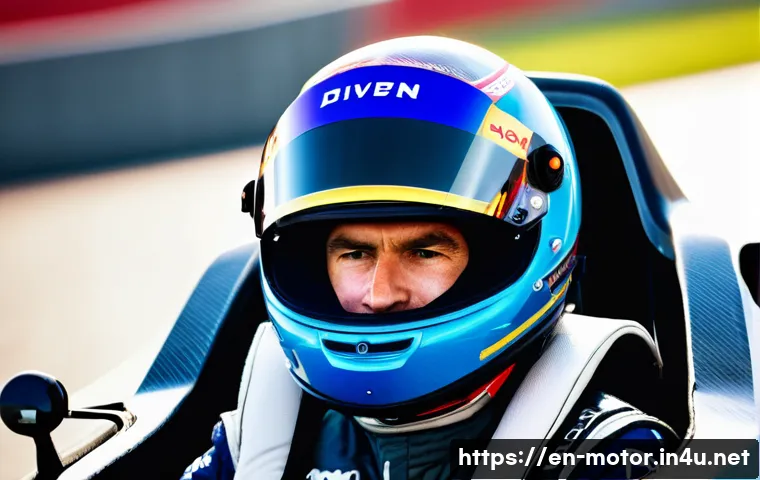
This relentless pursuit of perfection in the digital realm translates directly into tangible safety benefits on the real track. It’s truly a testament to how cutting-edge technology, combined with human ingenuity, can create a safer environment in one of the world’s most dangerous sports.
Unwavering Commitment: The Evolution of Safety
FIA’s Mandate for Progress: Driving Change
The role of the FIA in continually pushing F1 safety forward cannot be overstated. From my perspective, they are the driving force behind the constant evolution of protective measures.
They don’t just set standards; they actively research, investigate every incident, and introduce new regulations based on the latest findings. After every significant accident, there’s an immediate deep dive into the data, analyzing telemetry, on-board camera footage, and structural damage to understand precisely what happened and how future risks can be mitigated.
This proactive approach means that F1 safety is never static; it’s a living, breathing aspect of the sport that constantly adapts and improves. I genuinely believe that this rigorous oversight and commitment from the FIA is a huge reason why F1 drivers can push the limits so fearlessly today.
They know that behind the scenes, there’s a dedicated team ensuring their safety is paramount.
Lessons from Every Incident: A Continuous Cycle
Every crash, every near-miss, every technical failure in F1 is a learning opportunity. This continuous feedback loop is critical to the sport’s safety advancements.
When an incident occurs, it’s not just about who was at fault; it’s about understanding the mechanics of the impact, the performance of the safety features, and identifying any areas for improvement.
For instance, the horrific accident involving Romain Grosjean in Bahrain a few years ago, where his car split and caught fire, immediately led to renewed focus on fuel cell integrity and barrier design.
This constant cycle of evaluation, research, and implementation of new safety measures means that F1 is always getting safer. It’s not about avoiding accidents entirely – that’s an impossible dream in a sport of such speed – but about making them as survivable as humanly and technologically possible.
This dedication to learning and adapting is what makes F1 safety truly remarkable.
| Safety Feature | Primary Purpose | Key Material/Principle |
|---|---|---|
| Survival Cell | Protect driver’s vital space | Multi-layer Carbon Fiber Composite |
| Front Impact Structure | Absorb and dissipate frontal impact energy | Deformable Carbon Fiber Crumple Zone |
| Side Impact Protection | Resist side penetration and absorb energy | Reinforced Carbon Fiber/Zylon Honeycomb |
| HANS Device | Prevent head and neck hyperextension/flexion | Carbon Fiber/Composite Structure |
| Wheel Tethers | Prevent wheels from becoming projectiles | High-strength Zylon Cables |
Precision Engineering: Why Every Millimeter Matters
Meticulous Manufacturing: Crafting Perfection
When you consider the extreme forces an F1 car endures, it becomes clear why manufacturing precision is not just desired, but absolutely critical. Every single component, from the intricate weave of a carbon fiber panel to the smallest bolt, must be manufactured to incredibly tight tolerances.
Any deviation, even by a fraction of a millimeter, could compromise the structural integrity of a safety critical part. I’ve always been amazed by the sheer dedication to detail that goes into building these machines.
The materials are carefully selected, processed, and molded under precise environmental controls to ensure their properties are consistent and optimal.
This isn’t mass production; it’s artisanal engineering on an industrial scale, where each part is a testament to meticulous craftsmanship and a relentless pursuit of perfection.
This level of care in manufacturing directly translates into the unwavering reliability of the car’s safety features, offering that vital layer of protection when it’s needed most.
The Rigor of Inspection: Zero Compromise
Before an F1 car ever hits the track, it undergoes an astonishing array of inspections and quality control checks. This isn’t a quick glance; it’s a deep, analytical process involving advanced scanning technologies, stress tests, and detailed material analyses.
Every weld, every bond, every layer of carbon fiber is scrutinized to ensure there are no hidden flaws or weaknesses. For safety-critical components, this rigor is even more intense.
Teams employ techniques like ultrasonic testing and X-rays to look inside components and verify their integrity. The FIA also conducts its own independent checks and audits, ensuring that all teams comply with the stringent safety regulations.
There’s simply no room for compromise when human lives are at stake. It’s this unwavering commitment to inspection and quality assurance that gives both the drivers and us, the fans, confidence in the incredible safety standards of Formula 1.
It’s a painstaking, often unseen effort, but one that is absolutely fundamental to the sport’s ability to push the boundaries of speed safely.
Concluding Thoughts
It’s truly mind-blowing, isn’t it? When you dive into the sheer depth of engineering and the unwavering commitment to safety in Formula 1, it changes how you see every race.
What looks like pure, unadulterated speed is actually underpinned by layers upon layers of meticulous design, cutting-edge materials, and a constant drive to protect the drivers who push these machines to their absolute limits.
Personally, I walk away from every F1 article feeling a renewed sense of awe for the brilliant minds behind the scenes, continuously making the impossible, survivable.
Useful Information
1. The advanced carbon fiber used in F1 survival cells is so incredibly strong and light that variations of it are now being explored for aerospace applications and even high-performance road cars. Imagine having that level of protection in your daily drive!
2. Did you know that the “halo” device, which sparked so much debate when it was introduced, has been credited with saving drivers from serious injury multiple times? It truly proves that sometimes, the best innovations aren’t always the prettiest, but they’re undeniably effective.
3. While F1 cars are designed to be incredibly safe, remembering basic road safety principles for your own vehicle is still paramount. Always wear your seatbelt, avoid distractions, and maintain your car regularly – inspiration from F1’s rigor can make us all safer drivers.
4. Many safety technologies first developed for F1, such as advanced data logging and impact absorption principles, eventually trickle down to improve the safety of commercial vehicles. So, in a way, F1 engineers are making all our commutes a little bit safer!
5. The rigorous crash tests mandated by the FIA are not just theoretical; they are brutal, real-world simulations designed to push the cars beyond expected limits. This ensures that every component performs exactly as intended when it matters most – in a high-speed incident.
Key Takeaways
The incredible safety of modern Formula 1 cars is a testament to relentless innovation and a deep-seated commitment from engineers, teams, and the FIA.
It’s built upon core pillars: the virtually indestructible carbon fiber survival cell that forms the driver’s protective cocoon, meticulously engineered impact structures that absorb colossal amounts of energy, and personalized driver protection like the HANS device and multi-point harnesses.
Furthermore, advanced digital simulations allow for endless refinement, and a continuous learning cycle from every incident ensures that safety standards are always evolving, making F1 a thrilling, yet remarkably protected, spectacle.
Frequently Asked Questions (FAQ) 📖
Q: What exactly is this ‘survival cell’ everyone talks about, and how does it keep drivers safe in such brutal crashes?
A: Oh, the survival cell! Honestly, it’s the absolute heart of an F1 car’s safety, and it’s truly mind-boggling how strong it is. Think of it as the driver’s personal armored cocoon.
From what I’ve seen and learned, this isn’t just any old chassis; it’s a super-strong, single-piece structure, officially called the monocoque, mostly crafted from incredibly tough carbon fiber composites.
When an F1 car hits something at insane speeds, the survival cell’s main job is to remain intact, protecting the driver from any external intrusion. It’s designed to absorb and distribute massive impact forces away from the driver’s cockpit, essentially acting like an impenetrable shell.
I mean, I’ve personally witnessed crashes where cars are absolutely shredded to pieces, yet the driver’s compartment, that survival cell, looks almost untouched.
It’s like magic, but it’s pure, brilliant engineering ensuring the driver has the best chance of walking away from what could be a catastrophic incident.
That peace of mind, knowing they’re encased in such a robust structure, must be immense for the drivers!
Q: Beyond the survival cell, what other amazing engineering goes into making F1 cars so incredibly safe despite their speed?
A: That’s a fantastic question, because while the survival cell is paramount, it’s really just one piece of a much larger safety puzzle! The engineers are constantly innovating, and it’s fascinating to see.
We’ve got these incredible “crumple zones” at the front and rear of the car, which are designed to literally disintegrate in a crash, absorbing a huge amount of energy before it reaches the driver.
It’s counter-intuitive, right? But it’s brilliant. Then there are the side impact structures, which are layers of carbon fiber and Zylon (a material even stronger than Kevlar!) that add another layer of protection.
And let’s not forget the Halo device – now, I know it looked a bit odd when it first appeared, but honestly, it’s been a game-changer. Seeing how it’s deflected flying debris and even other cars in some frightening accidents, it truly reinforces its value.
Plus, there are things like the HANS (Head and Neck Support) device, which connects the driver’s helmet to their body, preventing whiplash, and even sophisticated fire suppression systems.
It’s all these layers working in harmony, like an invisible shield, that really makes you appreciate the dedication to safety in F1.
Q: How do F1 engineers know these cars will withstand such insane impacts? What kind of tests do they actually put them through?
A: This is where it gets really intense, and honestly, the sheer rigor of it all is astonishing. F1 cars aren’t just built; they’re essentially forged through a gauntlet of brutal crash tests regulated by the FIA.
Before a car ever hits the track, every single component, and especially the chassis, undergoes an incredibly comprehensive series of static and dynamic tests.
We’re talking about frontal impacts into a steel barrier at specific speeds, side impacts, rear impacts, and even tests to ensure the roll hoop (that structure above the driver’s head) can withstand massive downward forces.
They even drop heavy weights onto the survival cell to simulate crushing loads! Engineers use specialized sleds to replicate real-world crash forces, meticulously measuring every stress and strain.
From what I understand, if any part fails to meet even the slightest regulation, it’s back to the drawing board. It’s a continuous cycle of design, testing, analysis, and refinement.
It truly speaks to the level of precision and commitment that goes into F1 safety; they leave absolutely nothing to chance, which, as a fan, gives me so much confidence in the sport.